Fentanyl substitution for heroin. A working hypothesis
Fentanyl substitution for heroin. A working hypothesis
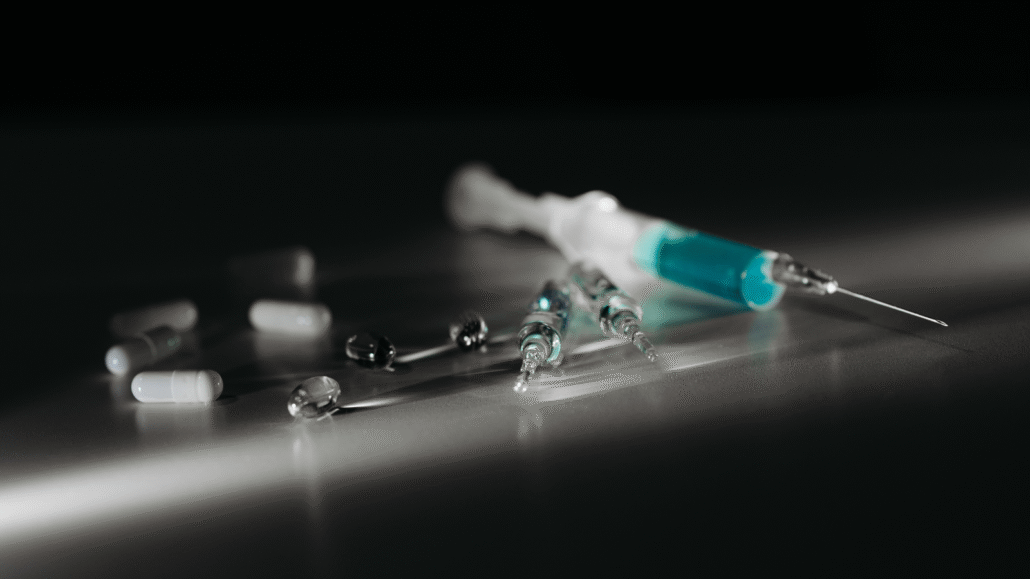
In Spain, we do not have any robust evidence that would allow us to affirm that the consumption of fentanyl, produced clandestinely, is a reality. The Spanish Early Warning System (SEAT) of the Government Delegation for the National Plan on Drugs has not, to date, issued any communiqué certifying the purchase and sale of illicitly produced fentanyl. In its 2022 report, references to fentanyl are minimal, with no mention of smuggling (OEDA, 2023a: 13). Another issue is the increase, at the expense of morphine and other opioids, in the clinical use of this potent opioid (OEDA, 2023b: 77). Misuse of opioid drugs, including fentanyl, is another issue. The resale of opioid drugs accounts for the forty grams seized in 2022 (Ministry of Interior, 2023: 190). Diversions are anecdotal. In no case could they supply a hypothetical demand for fentanyl.
I am going to give you an unpublished fact to reaffirm the thesis that there is still no clandestine fentanyl on the Spanish streets. In Episteme Social, since January 2022, we have been working on a line of study, thanks to the grant awarded by the Ministry of Social Rights and Agenda 2030 from the tax allocation of the Personal Income Tax, which investigates hidden drug-dependent populations (Episteme Social, 2023). So far we have interviewed 431 people. Only twelve people, i.e. 2.78%, have ever used fentanyl in their lives. Almost all of them have taken it under medical prescription. Only two people, i.e. 0.46%, had taken it due to a diversion of pharmaceutical fentanyl. None of the respondents reported having bought clandestinely manufactured fentanyl. Zero. And we are talking about the most deteriorated, aggrieved and marginalised consumers, who, in the case of clandestine fentanyl, would be the first recipients.
Does this mean that Spanish society is safe from any social and health crisis caused by fentanyl? The answer is simply no. If the substitution hypothesis is confirmed, this is a potentially problematic scenario. The substitution hypothesis asserts that if European markets for Afghan heroin become undersupplied, they will be replaced by fentanyl and other synthetic opioids. This is because criminal gangs never leave drug markets unprotected. They always offer alternatives. Even if the substitute substance is unknown and dangerous. Gangsters care little about public health. We saw this in 2007 with the shortage of safrole to synthesise MDMA. Faced with a shortage of MDMA, mephedrone and other cathinones met the demand on European dance floors (Martínez Oró, 2015: 140). They may not have been the first choice of consumers, but the always quick and ready criminal gangs offered an alternative at the time. We find several examples of substitution. Friends Antoniu Llort and Òscar Parés have helped me to remember spice as a substitute for cannabis, desomorphine (krokodril) as an alternative to heroin, HHC to achieve the effects of THC, kompot, in Poland, as a substitute for heroin. We would find more cases.
Is it possible that heroin markets are being neglected? Yes, it is possible. According to the UNODC, Afghanistan produced 79.48% of the world’s opium in 2022. The fate of Afghan opium is therefore at the mercy of European heroin markets. On 3 April 2022, the Taliban regime banned opium poppy cultivation. Drug policy experts greeted this news with some trepidation. Opium cultivation has accounted for between five and seven percent of Afghan GDP over the past twenty years. To eliminate opium production is to condemn a large part of the Afghan population to even greater extreme poverty. The socio-economic consequences called into question the effectiveness of the ban. But if it were to become a reality, European heroin markets could become undersupplied.
After the opium harvest of 2023, some voices pointed to a ninety per cent drop in production (Nemat, 2023). Worrying, but still an assumption. Confirmation, which strengthens the substitution hypothesis, came on 5 November. The UNODC presented the report ‘Afghanistan opium survey 2023’ in which it states that opium production in 2023 has decreased by 95%. In 2022, 233,000 hectares of opium poppy were cultivated, producing 6,200 tons of opium. In 2023 the estimate is 10,800 hectares and a production of 333 tons. One might think that these are only estimates. For the disbelievers, I recommend a review of the methodology used by the UNODC to make such estimates. The complex methodology is based on satellite images of the crops. Perhaps the reliability could be improved, but in any case the validity of the data is indisputable.
Even so, the 2023 harvest will produce between 24,000 and 38,000 kilos of heroin with a purity of between fifty and seventy percent (UNODC, 2023: 19). In other words, the amount of ‘heroin’ available on the streets will increase by a factor of ten. Will this quantity be enough to supply Europe? We have a historical precedent to answer this question. In July 2000, the Taliban regime banned opium poppy cultivation. In the spring of 2001 opium production fell by 90% (UNODC, 2023: 25). Due to existing stocks, and above all the fact that the Taliban were overthrown at the end of 2001, European markets continued to be supplied. With the Taliban out of power, the 2002 harvest returned to pre-2001 levels. The decline in opium production during one harvest was insufficient to break the heroin supply chain to Europe. Today, European markets still receive Afghan heroin. We will see how long the stockpiles hold out. It is likely that they can supply, as in 2001, European markets until the next harvest.
But what will happen if production in 2024 is equal to or less than in 2023? Well, prices will continue to rise, quality will fall and adulterations will become more dangerous, for example with nitazenes as has been the case in Ireland in recent weeks. And, it is likely that sometime in 2024 Afghan heroin will disappear from Europe. Then, as on other occasions, organised crime will fill its absence with analogous substances. At this point, the hypothesis of heroin substitution by fentanyl could cease to be a hypothesis and become a reality. Fentanyl is a strong candidate to replace heroin for three reasons. First, it can be manufactured without the need for opium as a raw material. Second, as a member of the opioid family, it produces effects that could satisfy, even as a substitute, people in need of heroin. Thirdly, it is much more profitable for the mafias to traffic a substance that is fifty times more potent than heroin, and therefore fifty times lighter in weight and volume, than to transport, hide and distribute it. This is not to say that other synthetic opioids or substances from other families may also appear to fill the Afghan heroin gap.
Who knows whether, when the Turkish mafias and their allies run out of heroin stocks, Mexican cartels will introduce fentanyl to Europe as they do to the United States. Or who knows if Turkish gangs themselves, rather than neglect markets, start trafficking fentanyl or other narcotics. Or who knows if Burma, the historic producer of the highly prized white heroin, will continue to increase its production and export again as in the past. Or who knows, if the Afghan farmers who have complied with the 2023 ban, in view of the exponential increase in price, will plant poppies again this autumn. In August 2019, a farmer was selling a kilo of opium for forty-eight dollars. In August 2023 the price reached an all-time high of 408 dollars (UNODC, 2023: 34). Who knows.
All in all, one might think that the decline in opium production in Afghanistan is good news. But nothing could be further from the truth. The disappearance of Afghan heroin opens the door to unknown scenarios in which fentanyl could mark an era. We will see how long heroin stocks last and what production will be in 2024. It is an irony of prohibitionism that part of European public health depends on Afghan farmers defying the prohibition of the Taliban’s totalitarian regime.
Leave a Reply
Want to join the discussion?Feel free to contribute!