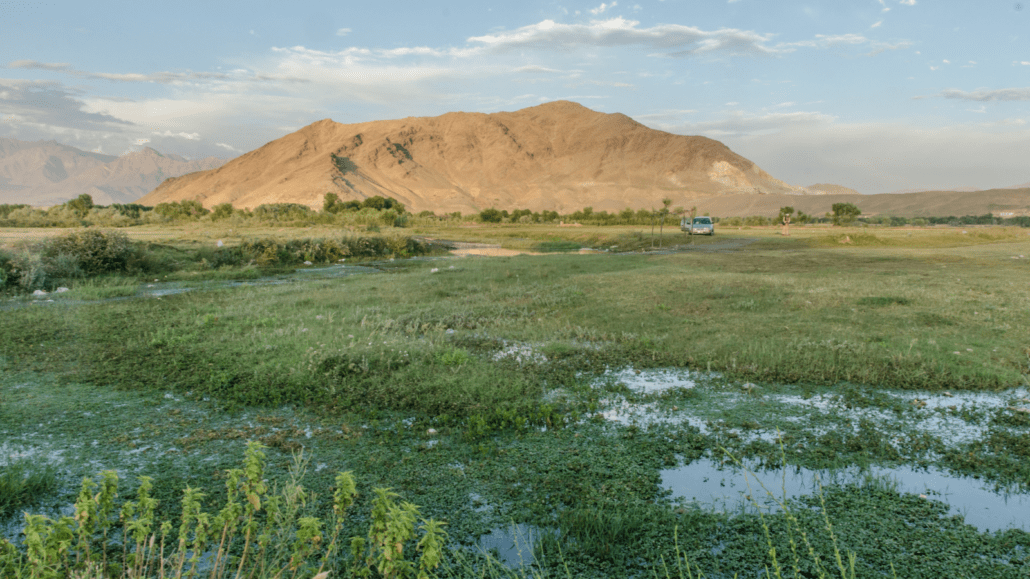
Opium cultivation in Afghanistan increases during the 2024 campaign. The threat of fentanyl becomes even more distant.
«Opium cultivation in Afghanistan increases during the 2024 campaign. The threat of fentanyl becomes even more distant.»
By David Pere Martínez Oró
In Afghanistan, the United Nations Office on Drugs and Crime (UNODC) has reported a 19% increase in opium cultivation in 2024 compared to the negligible production of 2023. While this increase may appear modest, it lends credence to the hypothesis formulated by Episteme Social in the study ‘Fentanyl in Spain. Evidence, perceptions and realities’. This hypothesis predicted that the 2024 harvest would be significantly lower than that of 2022, but would substantially exceed the 333 tonnes of opium produced in 2023. In the event that this prediction is accurate, the opium produced in 2024 could potentially supply Europe with a sufficient quantity of heroin. The hypothesis is further substantiated by data from the United Nations Office on Drugs and Crime (UNODC), which indicates that the 2024 harvest is significantly lower than that of 2022, but higher than that of 2023. This suggests a persistent supply of Afghan heroin to European markets, thereby eliminating the possibility of fentanyls or other synthetic opioids.To date, Spain continues to be supplied with heroin and is free of fentanyls.In June 2024, the study ‘Fentanyl in Spain. Evidence, Perceptions and Realities’ was presented in June 2024. The study was funded by the Government Delegation for the National Plan on Drugs in the 2023 NGO call for proposals.The presentation included the opening address by Dr Joan Ramon Villalbí, Government Delegate for the National Plan on Drugs, and Ernest Robelló, director of the CADAP 7 programme on drug policies in Central Asia, who explained the state of the art in Afghanistan and neighbouring countries. The study’s authors then presented the most noteworthy results.The study ‘Fentanyl in Spain. Evidence, perceptions and realities’ concludes that Spain will not suffer a public health crisis caused by fentanyl or other synthetic opioids, nor will the hypothesis of heroin being replaced by fentanyl be fulfilled. The study’s authors identified four reasons for this conclusion.
- The production of heroin from Afghan opium will continue to supply European drug markets. The reserves of heroin, the product of the exceptional harvests prior to 2023, will allow Europe to be supplied until at least October 2025.The secondary finding is that Afghanistan cannot survive without the income derived from opium. Despite the Taliban’s prohibition of opium production, the nation is struggling to overcome a multitude of challenges, including a severe economic crisis, widespread hunger, the exorbitant cost of opium, pervasive corruption, and the fragmentation of power. The Taliban’s internal discord further exacerbates the situation, making the ban on opium production unsustainable.
- It is evident that fentanyl and its illicitly produced analogues have been, and will continue to be, absent from Spanish markets. On a global scale, there has been a significant decrease in fentanyl availability, which can be attributed to both the international control process and China’s prohibition in 2019.
- The volume and characteristics of the demand for opioids render a public health crisis unfeasible. Spain has approximately sixty thousand regular heroin users, with a dominant profile of polydrug use and a high capacity for resistance. In the event of the emergence of synthetic opioids, users could replace heroin with other substances, from benzodiazepines to methamphetamine.
- In the event of the emergence of fentanyl, the robust Spanish addiction care network has the potential to deliver effective responses to the threat. Opioid substitution treatments with methadone and buprenorphine, the availability of naloxone in various formulations, highly qualified professionals and a network of resources distributed throughout the territory provide the most effective defence against any threat posed by synthetic opioids or other substances.
The initial assertion that Spain would be free of fentanyls was reinforced on 27 November 2024, when the UNODC presented the results of the annual report on opium cultivation in Afghanistan.According to the UNODC, Afghanistan cultivated 12,800 hectares of opium in 2024, representing a 19% increase in cultivated land compared to 2023 (10,800 hectares). The increase in opium cultivation in 2024 compared to 2023 can be attributed to several factors.
- The economic crisis and the humanitarian crisis in Afghanistan are intricately linked, with opium being the country’s primary economic livelihood and main export product. Historically, the opium economy has accounted for between 9% and 15% of the country’s Gross Domestic Product (GDP). Since the fall of Kabul, Afghanistan has faced a deep economic crisis and constant human rights violations, especially against women and girls. The fentanyl report indicates that in autumn 2023, Afghan farmers faced a dilemma in deciding whether to adhere to the Taliban’s prohibition on opium cultivation for the 2024 crop season, a decision that would result in their continued impoverishment or defiance, thereby ensuring the sustenance of their families.It is a well-documented fact that numerous farmers have chosen to defy the ban.
- The elevated cost of opium represents a considerable motivation to disregard the prohibition, particularly in contexts where alternative economic opportunities are limited.Following the 2020 harvest, coinciding with the global prevalence of the Coronavirus pandemic, the price of opium attained an unprecedented nadir. The average price in Afghanistan amounted to $42 per kilogram of dry opium. However, in 2021, the price increased to $63 per kilogram, and by 2022, it had risen to $219. By June 2023, the price had reached an average of $300 per kilogram across all regions. The Afghan average in June 2023 was $408 per kilogram of dry opium, and in August of that year, a kilogram was being sold for almost $580 in the southern Afghan region. According to the UNODC report, dry opium prices stabilised in 2024 at around 730 US dollars per kilogram, which is significantly higher than the pre-ban average.These high prices have encouraged farmers to resume opium poppy cultivation.
- The multi-ethnic dimension is a salient factor in understanding Afghanistan’s socio-political landscape. The country’s rich ethnic, linguistic and cultural diversity, encompassing a multitude of languages, has profound implications for societal dynamics. The efficacy of the Taliban’s opium ban is influenced by these ethnic differences, as each ethnic group possesses distinct interests in opium cultivation, often with significant economic dependencies. The implementation of a prohibitionist policy is unlikely to alter these anacratic subsistence practices, underscoring the need for nuanced policy interventions. If prohibition was effective in 2023, this can be attributed more to the economic interests of ethnic and regional leaders in selling opium at a high price than to the Taliban’s original prohibitionist intentions.
- Geographic increase in cultivation: In 2024, a notable geographic shift in cultivation areas was observed. The majority of opium poppy cultivation, which historically took place in the southwestern provinces, was relocated to the northeast, particularly in Badakhshan province, where 59% of all cultivation is concentrated.
This combination of factors has resulted in a 19% increase in the area under poppy cultivation. In summary, opium is experiencing a resurgence in Afghanistan, albeit a fragile one. This scenario ensures European markets will have access to heroin and further mitigates the threat of a fentanyl public health crisis.

Leave a Reply
Want to join the discussion?Feel free to contribute!