
Medicalised Childhoods. The Invisibility of Hypnosedative Drug Use Among Unaccompanied Young People in Social Exclusion: Prevention as an Unresolved Challenge
Medicalised Childhoods. The Invisibility of Hypnosedative Drug Use Among Unaccompanied Young People in Social Exclusion: Prevention as an Unresolved Challenge
By: Ana Campaña Martínez
In recent years, an increase in the use of hypnosedative drugs without medical prescriptions among young people has been observed. Medications such as Rivotril (benzodiazepines) and Lyrica (pregabalin) are being misused, raising concerns among health and education authorities.
According to the 2023 EDADES survey, in Spain, the average age for starting the use of hypnosedatives without a prescription among the general population aged 15 to 64 years is 30.8 years. However, data from the ESTUDES survey of the same year, which focuses on secondary school students, reveals a troubling reality: young people are beginning to use these drugs at much younger ages. In 2023, the average starting age was just 14.4 years, remaining within the range of 14 to 15 years.
Although official statistics on hypnosedative use among young people provide a general overview, certain youth population profiles are not fully represented in these figures. This raises a crucial question: to what extent do official statistics reflect the use of hypnosedatives among socially excluded young people?
At Episteme, we have been researching addictions within hidden populations for about two years. Through fieldwork conducted as part of the study “Empowerment Processes and Access to Rights in (Semi-)Hidden Drug-Dependent Populations” [i], funded by the Ministry of Social Rights and Agenda 2030 through the IRPF 0.7% programme, we have identified a sustained and concerning trend that has gone unnoticed in general statistics: the abuse of hypnosedative drugs among Unaccompanied Migrant Minors and Formerly Institutionalised Migrant Youth.
The image of the Unaccompanied Migrant Minor consuming substances in public spaces has been politicised and exploited during moments of social tension and political polarisation. This image, when convenient, is used alongside messages of hatred and discrimination. However, the reality shows a situation of legal and administrative insecurity and systematic rights violations, both as minors and as migrants.
In our research, we conducted interviews with Unaccompanied Migrant Minors and Formerly Institutionalised Migrant Youth to better understand the concerning phenomenon of hypnosedative drug use. We found that these young people begin using benzodiazepines between the ages of 12 and 13, one or two years earlier than the average reported by the EDADES survey for the school population.
From our sample, 24% of young people admitted to daily benzodiazepine use, and 28% reported having used them in the past. Additionally, 84% of respondents reported daily cannabis use in combination with benzodiazepines. The reasons behind this consumption vary, but mental health issues stemming from migratory grief and painful experiences during their migration journey stand out.
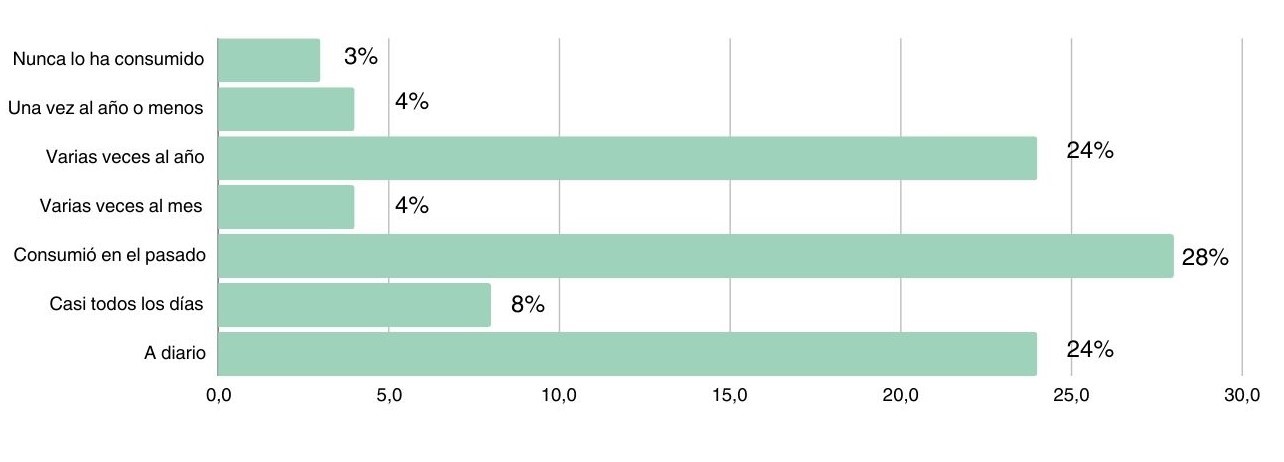
Figure 1. Frequency of benzodiazepine use among the interviewed population (N:25). Source: Episteme, based on the study.
Our research identified three key moments when the use of these drugs intensifies, with greater impacts on mental health and relational problems:
- Initiation of cannabis use in the country of origin.
- Initiation or increase during the institutionalisation phase or in border cities.
- Initiation or increase following deinstitutionalisation.
It is necessary to generate knowledge about the identified phases because this allows for the avoidance of repeated errors and facilitates discussions on care models that enhance action planning, protection, and reception. Furthermore, a care model could be established that is applicable to other areas experiencing similar phenomena. Each of these stages involves specific risks affecting young people’s mental health: environmental risks, tense surroundings, lack of future prospects, and lack of training. If no preventative models tailored to their needs are implemented, the child protection system may, ironically, create unforeseen scenarios.
What is particularly concerning and underscores the importance of this study is that the child protection and administrative guardianship system, based on meritocratic models, may contribute to situations of neglect rather than providing the necessary protection to these vulnerable young people. A psychologist based in Ceuta highlighted this reality with the following testimony:
“The news we receive about them is that, in the end, they end up committing crimes on the street and being sent to detention centres because, of course, a child with so many difficulties, with consumption problems, emotional issues… Even though the people working with these children might think that giving them a resource is ‘rewarding’ their bad behaviour, so to speak, in reality, there is no preventative work. That child who is here, whether you like it or not, will be your neighbour tomorrow. So, do what you can to make him a good neighbour.”
(Psychologist, Ceuta, Youth Centre, N18)
Later this year, we will publish the results of our study, but we can already share some important findings and identified needs:
- Although the profile of unaccompanied minors has evolved towards young people with more defined migration projects, there are still concerns about those who arrive with street-living habits and deeply ingrained drug use.
- There is a gap in addiction prevention actions tailored specifically to these young people in their social environments, whether in care centres or supervised housing.
- Resources for treating Dual Pathology—coexistence of an addictive disorder and another mental health condition—are very limited for this population.
- Promoting social integration within reception centres and adapting harm reduction resources with a transcultural perspective is recommended.
Despite numerous improvements to the child protection system for unaccompanied minors and expectations for a review of Article 35 of the Immigration Law—which we hope will expedite their legal situation and improve their material conditions—a comprehensive preventative perspective on addictions is still lacking. These addictions are often viewed more as a cause of their situation than as a consequence, underscoring the need for more effective and preventative intervention in this area.
“People need to work. Give them work in the fields, anything, give them housing and let them start working. Give them an opportunity; there are people who are genuinely worth it. I’ve been living like this for twenty-seven years. Imagine where I’ll be in two years: on drugs, ruined in prison, without resources, without anything. The door you knock on won’t open.”
(Lukyan, Asturias, 275, Formerly Institutionalised Migrant Youth, 27 years old)


Leave a Reply
Want to join the discussion?Feel free to contribute!